

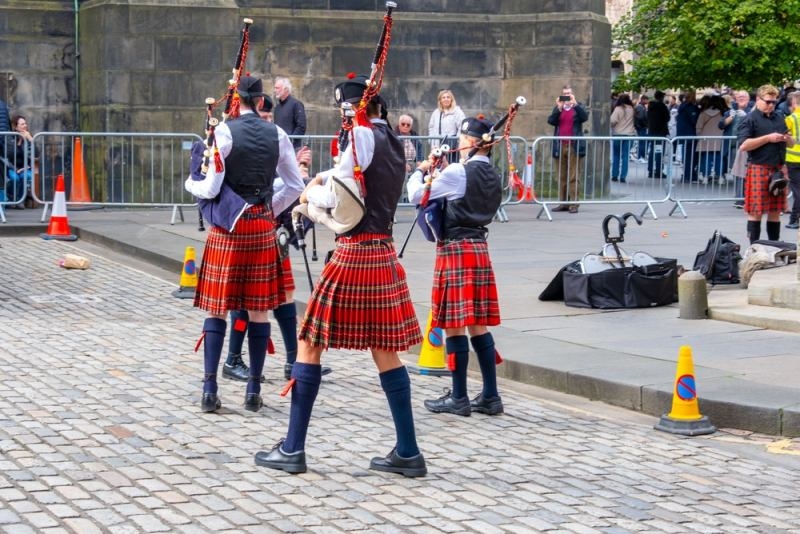
Scotland’s dramatic shorelines, foggy lochs, old castles, and distant islands are settings of many tales throughout history. There are stories about beings capable of changing shapes, seal people, fairies, ghosts, and strange creatures, all of which are still an integral part of the local culture. The folklore tours in Scotland offer travellers the opportunity to learn the stories in relation to the locations that inspired them through guided walks, visits to a castle, or an evening of storytelling.
Many Scottish mythical creatures are tied to the natural world. Their stories helped explain the unfamiliar, warn about dangerous landscapes, and pass community values between generations.
In Scottish folklore, kelpies are supernatural water spirits often described as horses that lure people toward lochs and rivers. In many versions, anyone who climbs onto the creature’s back becomes trapped and is dragged beneath the water. The tale may have warned people about dangerous water.
You can encounter a striking modern tribute at The Kelpies in Helix Park near Falkirk. Created by artist Andy Scott, the 30-meter sculptures celebrate both mythical water horses and the working horses of Scotland’s industrial past. Walk around them or check for guided tours; after dark, they are illuminated.
Selkies are creatures that supposedly exist in seal guise in the waters and transform into humans after they have stripped off their sealskins. Tales about selkies are most common in Orkney and Shetland, where people have always had a strong connection with the waters. Many of these tales focus on issues such as belonging, freedom, and the connection between land and the seas.
Discover the world of selkies and mermaids in the Northern Isles or at other coast-side storytelling sessions. There is the Mermaid of the North statue in Balintore, Easter Ross, overlooking the Moray Firth. Selkies and mermaids are not the same in folklore.
Nessie is one of the well-known legends of Scotland. There were legends about mysterious water creatures before the era of tourism made Loch Ness known all over the world; however, there is no scientific proof that there is an unidentified creature living in the lake. It is interesting due to the mystery and tales told by people.
The place can be visited near Inverness, where you can visit Urquhart Castle located on its shore and go boating. There are special places dedicated to Nessie in Drumnadrochit.
Also Read: Scottish Food Experiences That Define True Scotland Today
Folklore feels vivid when tied to a real building, object, or landscape. Historic sites help visitors distinguish documented history from supernatural details added through retelling.
Dunvegan Castle on the Isle of Skye is the clan seat of Clan MacLeod and is also the keeper of the renowned Fairy Flag. Legend has it that the mysterious flag was gifted by a fairy to the MacLeod clan for protection during times of dire need, and the power of the flag can be used only thrice.
The flag is very real; however, the source of its magic lies in legends only. Take a visit to the Dunvegan Castle collection along with the nearby Fairy Bridge.
Crathes Castle, located near Banchory in Aberdeenshire, is linked to the tale of the Green Lady, who, according to stories, wears green clothes and carries a baby. There are many versions of the legend that are related to the secret of this family. Regardless of your belief in the existence of ghosts, the castle will be interesting for its historical rooms, ceilings, garden, and estate.
Think of the ghost as a legend and not a fact. A guide can help you to distinguish facts from legends about the castle’s history.
There are folklore tours in Scotland where legends meet regional culture. Consider walking tours in old cities, castle visits, Highland tours, and other options involving both landscape and storytelling. For instance, in Edinburgh there are some evening tours devoted to ghost stories, and in the Highlands and Islands guides can speak about local legends, place names, and oral history.
Check out whether the tour is a piece of theatre or history, and make sure you know the size of the group, walking distance, accessibility, weather plan, and transport arrangement. It would be better if you selected a guide respecting local legends and not making everything related to the supernatural true.
Develop your own folklore tour combining the Kelpies in Falkirk, Loch Ness and Urquhart Castle from Inverness, and Dunvegan Castle and Fairy Bridge on Skye. Remember that Scottish distances can be deceptive and try not to pack many different sites in one day.
Folklore does not just live in books and attractions. Traditions of Scottish folklore exist in the form of music, seasonal celebrations, get-togethers, and family folklore, connecting legends to present-day times.
One can search for festivals, museums, libraries, and art centres that hold speaking performances or traditional music events. Ceilidhs are musical, dance, and participatory events, whereas Gaelic-speaking ones are an opportunity to experience living linguistic traditions of Scotland.
Concerning Scottish legends and storytelling, one should allow a storyteller to tell the story in his or her manner. The Selkie legend will be different on various islands – it is all about oral tradition. It would be interesting to know how the story was told and why.
Should one look for traditional Scottish storytelling events, one can contact local museums, libraries, art centres, festivals, or visitor information centres for current information. There are seasonal programmes; booking is needed. It is more personal at small events where storytellers talk about local names, family history, or traditions.
Instead of attempting to visit every mythical spot, select a certain region. Pair up The Kelpies with Loch Ness, look into islands’ mythology through Skye or the Northern Isles, or find castles where you can experience ghost stories. It will help you not only with traveling but also to appreciate every legend.
The weather can be unpredictable, particularly in the Highlands and along the coast. Take a raincoat with you, wear comfortable footwear, and know the opening times of all the sites you visit. Avoid trespassing on ruins and coastlines, and don’t swim in dangerous waters.
Must Read: Scotland Food Guide Exploring Traditional Food in Scotland
Some of the most memorable experiences of folklore in Scotland involve tales, the landscape, and those individuals who keep the stories alive. Whether the tales pertain to kelpies or selkies, the Fairy Flag or Loch Ness, each story provides a unique perspective into Scotland’s connection with its environment, history, and mysteries.
Combine a handful of places that tell their stories with a tour or storytelling event, remain open to hearing variations, and savor the legends as part of the Scottish culture.
Some legends are connected to real places, historical objects, or local customs, but their supernatural elements are generally unproven. Folklore blends memory, imagination, belief, and storytelling, so it is useful to separate documented history from the details added through generations of retelling.
You will not find verified mythical creatures, but you can visit places associated with their stories. The Kelpies sculptures near Falkirk celebrate Kelpie legends, Loch Ness is linked with Nessie, and Orkney and Shetland are strongly associated with Selkie traditions.
Many are, although some ghost walks include frightening stories or mature themes. Check the tour description and recommended age before booking, and consider daytime castle tours or family-friendly storytelling sessions if younger children prefer gentler tales.
A selkie is traditionally a seal that can remove its seal skin and take human form, while a mermaid is usually described as a being with a human upper body and fish tail. Regional stories sometimes overlap, so descriptions can vary.
Folklore experiences are available throughout the year, but availability varies by location and event. Summer offers longer daylight for exploring castles and islands, while autumn and winter can suit atmospheric ghost tours and indoor storytelling. Check local schedules before planning around a specific event.
This content was created by AI